
When the best places to visit in Piedmont, Italy, include impressive Baroque royal residences, medieval towns, wine regions, scenic valleys, lakes, and surprisingly fascinating cities, you know you’re in for a treat.
Piedmont (Piemonte in Italian) still doesn’t get the focus it deserves, and I’m hoping to change that. So without further ado, here are some of the best Piedmontese destinations to inspire your next trip.
*I try to keep the information on this blog as updated as possible, but I still recommend consulting the latest prices, opening hours, and other details on the official website of each site, hotel, and tour, as well as checking the updated public transport routes and timetables. I share my personal experience and cannot guarantee yours.
*This post may contain affiliate links from which I earn a commission. As an Amazon Associate, I earn from qualifying purchases. For more info, read my disclosure and disclaimer. This post may show pop-ups.
*As a partner of the Get Your Guide affiliate program, I got a 15% discount when I purchased my Torino+Piemonte Card. That said, I always share my honest opinions.
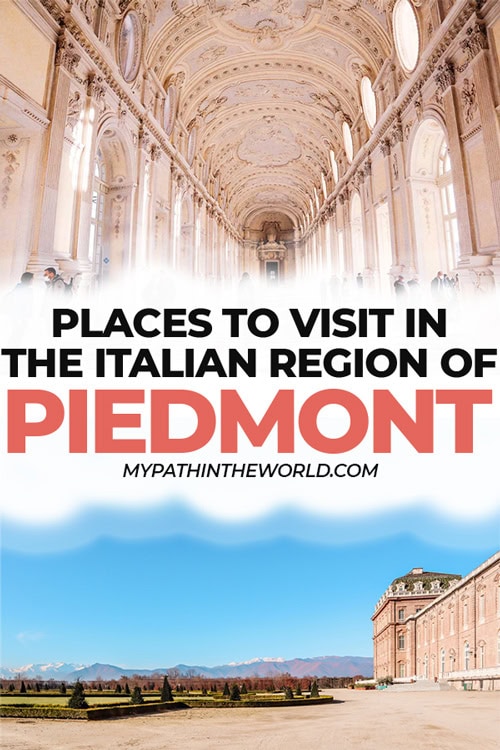
What Is Piedmont Known For? Why Should You Visit?
Piedmont is situated in northwest Italy and shares borders with both Switzerland and France. It’s actually the second-largest region in Italy (after Sicily).
Known for its wines & food, truffles, chocolate, UNESCO-listed royal residences of the House of Savoy, rolling hill views, Alpine scenery, and even some lakes, Piedmont is a fascinating region steeped in history, culture, and nature, yet it is an underrated one.
If you love discovering hidden gems as much as I do, it will not disappoint.
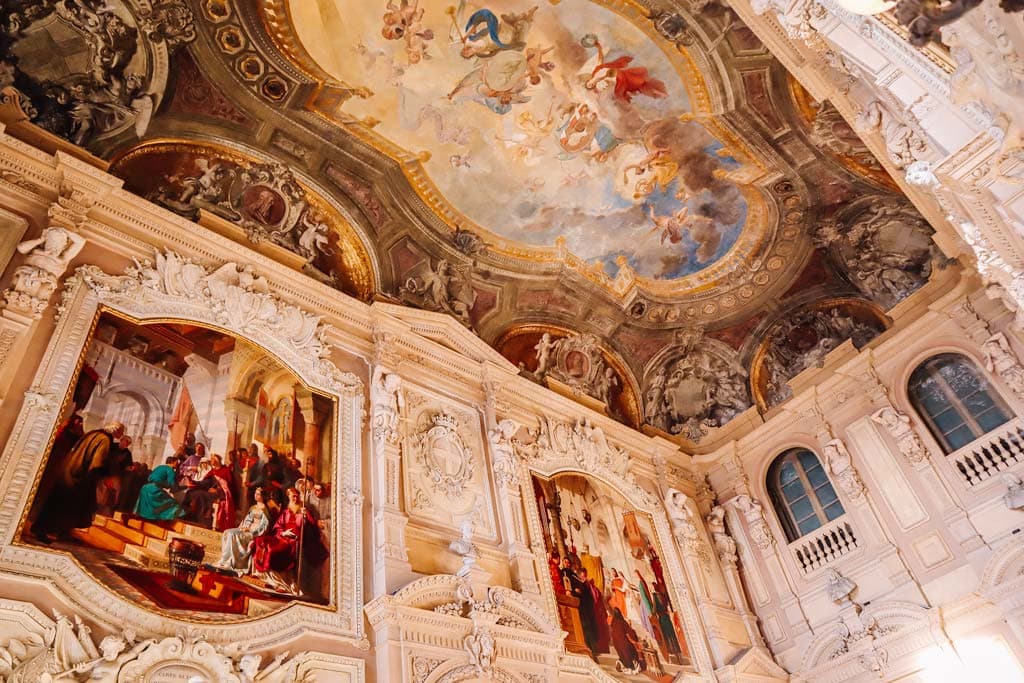
How to Visit Many of Piedmont’s Tourist Attractions for Free – Torino+Piemonte Card
Allowing you to enter dozens of attractions in Piedmont for FREE and offering plenty of other discounts, the Torino+Piemonte Card can save you a lot of money (the 5-day card saved me around 80 euros).
Whether you’re spending a couple of days in Turin or taking a road trip through the region, the 2,3, or 5-day card will be handy.
Most of the palaces and museums are not to be missed, and they cost 10-20 euros to visit, but the card is reasonably priced and offers FREE entrance, so there’s no reason why you wouldn’t save money with it.
Buy your Torino+Piemonte Card here (there’s a link to all the discounts)!
Best Places to Visit in Piedmont, Italy
Turin
Turin, the region’s capital, is a wonderful city break destination I absolutely adored. Despite being the 4th-largest Italian city and offering dozens of things to do and see, it has yet to be discovered by international travelers (so book a flight now!).
The entire region is home to palaces and villas recognized as a UNESCO World Heritage Site – the Residences of the Royal House of Savoy.
And since Turin was the capital of several kingdoms ruled by the Savoy family, quite a few of these residences are found in the city itself.
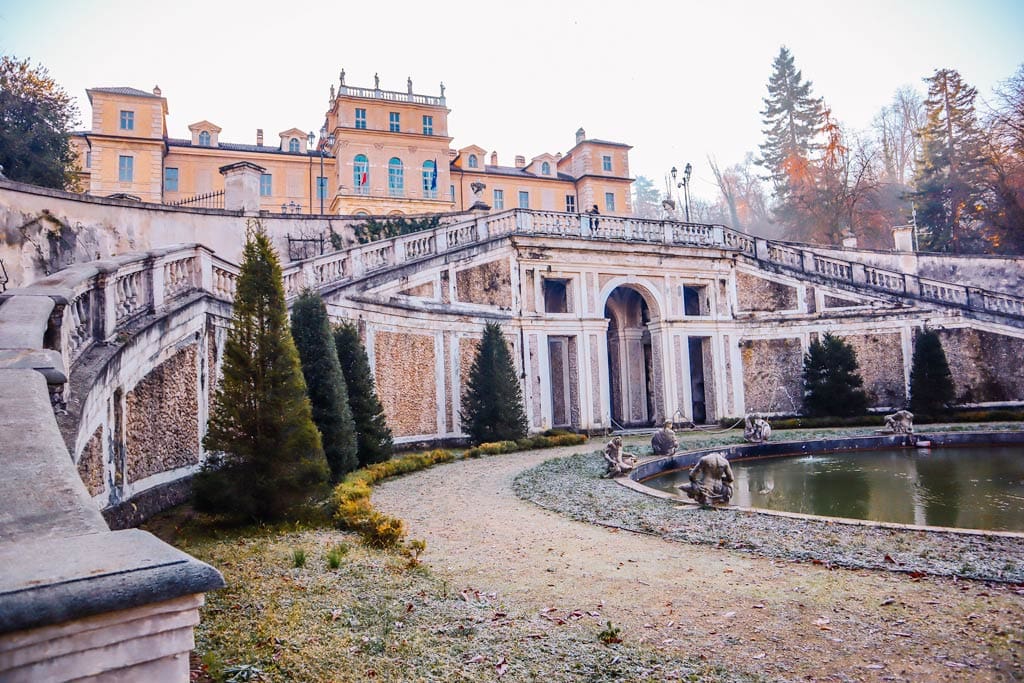
Amongst them are the Palazzo Reale, Palazzo Madama, Castello del Valentino, and Palazzo Carignano, and you can also visit the hilltop Villa della Regina, which overlooks Turin from the eastern side of the Po river.
Other must-see places in the city include the National Museum of Cinema (housed in the iconic Mole Antonelliana building), Valentino Park, Porta Palazzo market, and the Egyptian Museum, but that’s just the tip of the iceberg.
If you need more reasons to visit Turin, the elegant city is also the Italian capital of chocolate, home to incredible historic cafes, the birthplace of the aperitivo tradition, and a great place to indulge in exquisite Piedmontese food.
Tip: Most attractions can be visited for free with the Torino+Piemonte Card.
Get My Turin Map & Digital Guide (Currently FREE)
All-in-one-place guide to experiencing Turin’s highlights, hidden gems, and unmistakable character – while making planning your city break easier.

– Time-saving, ready-to-use map with 80+ of my favorite spots in Turin, with info and my personal notes
– A few extra travel guides and tips to help you plan your trip, including a 4-day itinerary you can adjust to your liking
– Lifetime access including updates + offline access
– One free invite for your travel buddy
Read more:
- Turin travel tips
- Long weekend in Turin
- Where to stay in Turin
- Turin in winter
- Hidden gems in Turin
- Turin or Milan
Alba
By Lori from Italy Foodies
Visiting the ancient city of Alba is one of the best things to do in Piedmont, particularly for lovers of good food and wine. The small city has around 30,000 residents and is wonderfully walkable in just a few days.
Streets in Alba’s historic center are lined with unique shops and eateries and surprisingly dotted with enough amazing Roman ruins to keep any casual archeology fan fascinated. But for foodies, this is a special city known for food and wine that’s extraordinary.
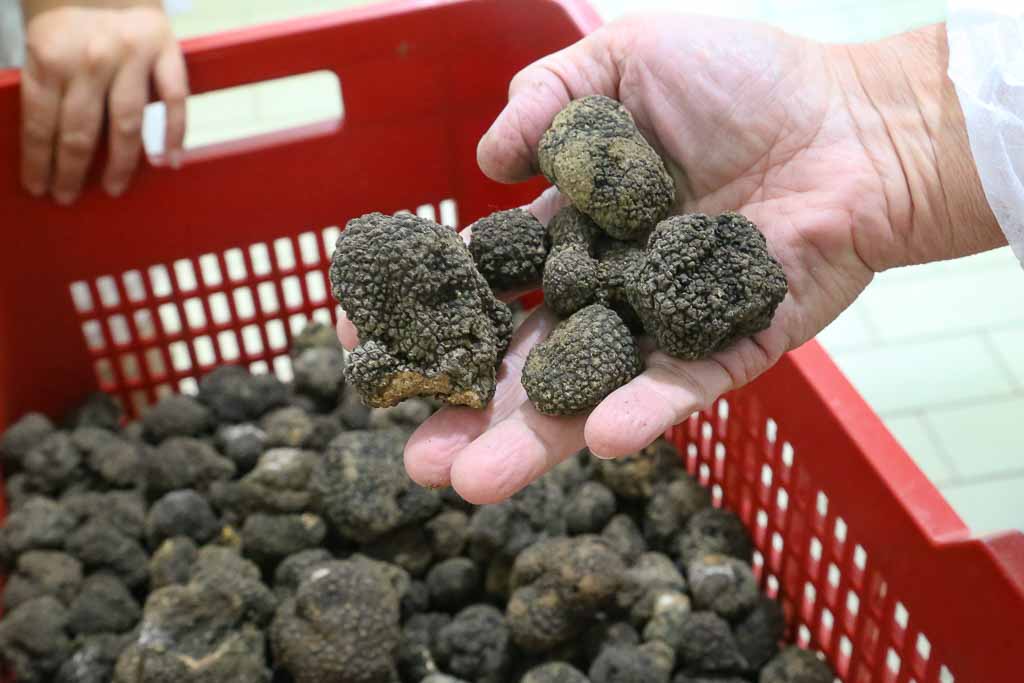
Barolo and Barbaresco dominate the local wines in Piedmont, but the one food for which Alba is renowned throughout the world is the distinctive Italian truffles that abound.
While both white and black truffles grow in the region, the heady Alba white truffle is highly prized and draws visitors by the tens of thousands every year to the Alba White Truffle Fair.
For several weekends, the earthy white and black truffles are celebrated with parades and a full slate of competitions and exhibitions. The truffle market is a sight to see, with the weightier morsels worth thousands of dollars garnering recognition and ribbons.
The best time of year to visit Alba is in the early fall if you want to avoid the crowds and still enjoy the beautiful weather. In fact, the city is one of the best places to visit in October in northern Italy.
Venaria Reale
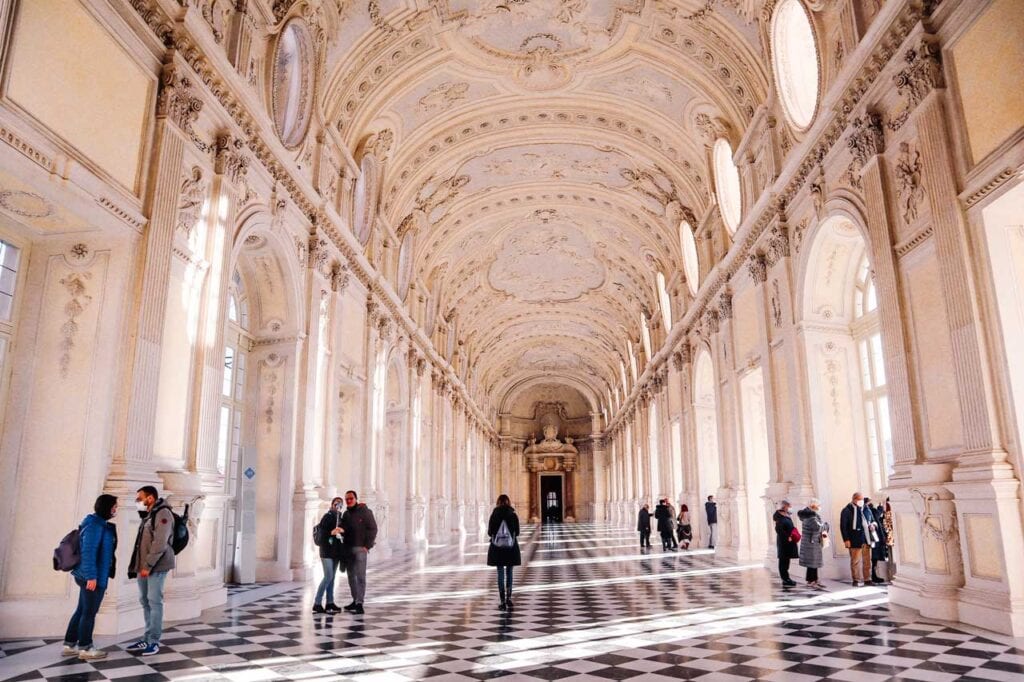
If you’re looking for beautiful places near Turin, Venaria Reale has to be on your bucket list.
Home to one of the most remarkable UNESCO-listed Savoy residences in Piedmont, the town is conveniently reachable by bus number 11 from Turin.
The Palace of Venaria (Reggia di Venaria Reale) was commissioned by Duke Carlo Emanuele II in the 17th century and served as a base for his hunting trips.
The Baroque-style landmark makes an impression on the inside and out, and the Alpine setting and beautiful gardens are a huge bonus.
Behind it, you’ll also find La Mandria Park and the Castle of La Mandria, which also belonged to the House of Savoy. You can buy a combo ticket to see both palaces or visit just one, but you must book your tickets in advance (I opted for the All in a Palace).
Both places are free to explore with the Torino+Piemonte Card (when booking your ticket, you can mark that you have purchased the city card).

Stupinigi
Another UNESCO-listed Savoy residence located only a few km away from Turin is the Palazzina di Caccia di Stupinigi.
Boasting a mix of Baroque and Italian Rococo architectural styles, this stunning 18th-century royal hunting lodge & leisure palace was commissioned by Duke Victor Amadeus II and designed by Filippo Juvarra.
From its outer facade to the central hall to the apartments of the Duke of Chiablese, every corner here is exquisitely decored and embellished with the most amazing details, some of which are inspired by nature.
You can visit the palace for free with the Torino+Piemonte Card, and you don’t have to buy your tickets in advance (in fact, an online reservation is more expensive).

Basilica di Superga
By Angela from Fearlessly Italy
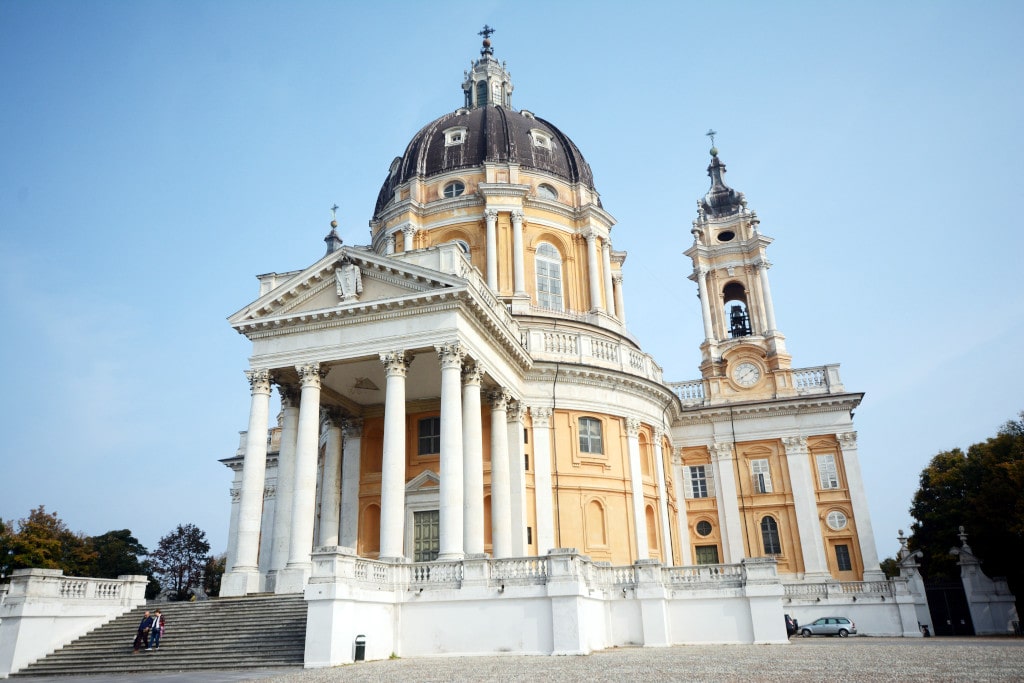
Northeast of Turin, the Basilica of Superga is a pearl of the Italian Baroque.
Steeped in history, the church is located almost 700 meters above sea level, and on clear days you can enjoy a beautiful view of the city.
A project by Sicilian architect Filippo Juvarra, the building of Superga Basilica was ordered by Duke Vittorio Amedeo II following a vow to the Virgin Mary that, in case of victory, he would have built a church from the same hill where he and his army settled to observe the invading French army.
Inaugurated in 1731, the Basilica is 75-meter tall, and inside, it counts six side chapels, five altars, and a rich collection of artwork.
Next to the church is the complex of the royal tombs and apartments that belonged once to the Savoys, Italy’s former royal family.
This can be visited with an interesting tour (in Italian) that explains the facts about the construction of the Basilica and modern Italian history.
To reach the Basilica of Superga from the city center, take a bus or a tram to the Sassi station, and from here, take a 20-minute train ride up the hill. You can visit it for free with the Torino+Piemonte Card.
Sacra DI San Michele
By Linda from Insieme Piemonte
Located only 40 km away from Turin, high above the entrance to Val di Susa, the impressive Sacra di San Michele is definitely one of the best places to visit in the Piedmont region.
Built between 983 and 987, that ancient abbey inspired Umberto Eco to conceive the world-famous novel “The Name of the Rose”. Nowadays, it is one of the symbols of Piedmont.
The self-guided tour through the gigantic walls and well-preserved history is absolutely worth the €8 entrance fee. Via the “stairways of the dead,” you will reach the 12th-century church.
Several members of the Savoy, one of the oldest royal families in the world, are buried here. From the ruins of the Tower of Bell’Alda, you will be able to see the city of Turin, if the weather permits.
Along the tour, you will have the chance to enjoy fantastic views of the Susa Valley and the alpine mountain peaks of Italy, France, and Switzerland. The Sacra di San Michele can be reached by car, bus, or via some great hiking trails.

Stresa and the Borromean Islands
Owned by the aristocratic Borromeo family since the 16th century, the Borromean Islands are a group of islands and islets situated in Lake Maggiore, a short boat ride away from the city of Stresa.
Open to the public from March to October, you can visit Isola Bella and Isola Madre, home to stunning palaces and landscaped gardens dating back to the 16th-17th centuries.
You can also wander through the cobbled alleys of the only inhabited Borromean island, Isola dei Pescatori (or Isola Superiore).
Getting there: The access to the islands is by ferry/boat. You can either book a hop-on hop-off boat tour or purchase ferry/boat tickets directly at Stresa’s ferry terminal (like I did).
Palace tickets: Get them at the ticket offices on the islands or in advance online (recommended). Note that you can purchase a combo ticket that includes both Isola Bella and Isola Madre.
When you’re done exploring the islands, enjoy strolling through the lovely streets of Stresa. Not too far from the city, you can also head to the jaw-dropping Botanical Gardens of Villa Taranto.

Cannobio
While you won’t have much sightseeing to do in Cannobio, it’s still one of the loveliest towns on Lake Maggiore, sitting near Italy’s border with Switzerland.
Its first documented mention dates to the early Middle Ages, but archeological finds in the area suggest it was already inhabited during Roman times.
You can check out Cannobio’s churches and enjoy its Sunday market, but its true charm is revealed when you walk freely along the promenade and through its streets and alleys.
Cafes and restaurants line the waterfront, and what’s better than grabbing a cup of coffee or lunch while taking in the lake views?

Lake Orta
Lake Orta sometimes gets overlooked by travelers planning a trip through northern Italy’s lakes (Lake Garda, Como, Maggiore, and others), though it’s one of the most beautiful places in Piedmont.
What it lacks in size, it makes up for in beauty, and a day should be enough to visit a few of its tiny yet beautiful towns, including Orta San Giulio, Pella, and Omegna.
From Orta San Giulio, you can also take a short boat ride to the picturesque Isola San Giulio, a small islet in the lake mostly known for housing the 12th-century Basilica di San Giulio.
Barolo and Its Castle
By Larch from The Silver Nomad
Rising above the small village of Barolo in the Langhe wine region, the ancient Barolo Castle dates back to the 10th century.
Originally a fortified castle, it was taken over by the Falletti family in around 1250. The family made changes and reconstructed the castle, which had been damaged in the wars. Ultimately, in the 1800s, it became a country retreat for the Falletti family.
After the death of the last Falletti heir in 1864, it became a college for poorer students in the area.
The castle became abandoned in the 20th century and was bought by the Township of Barolo and restored. Since 2010, the castle has housed the Wine Museum of Barolo – WiMu (free to visit with the Torino+Piemonte Card).
The museum has an interactive route through the five floors of the castle. The tour aims to take you through a sensory journey.
Each floor has a different theme – nature, the arts, restored rooms as used by the Falletti family, and the Barolo College. When you get to the top floor, you can step out onto the balcony to see the rolling green hillsides covered in vines.
To round off your tour, you have to try some magnificent Barolo wines. You can book a guided wine tour with tastings in the nearby area.

Forte DI Fenestrelle
By Linda from Hiking the Alps
The impressive Fenestrelle Fort is located in the middle of the beautiful Val Chisone, 85 km west of Turin. You can already see the massive fortification from far when traveling through the narrow valley.
Fenestrelle Fort actually consists of 3 individual forts connected by a 3-km-long wall along the mountain ridge. Built within that wall is the famous, world-longest “covered staircase” with 4000 steps.
It connects Fort San Carlo in the valley and Fort delle Valli at 1800 meters above sea level, which have more than 600 meters of height difference.
Starting in 1728, it took 122 years to build the largest Alpine fortress in Europe. The powerful fortification, which was built to defend against foreign invasions, was mostly used as a garrison and prison.
After WWII, the fort lost its purpose and was abandoned. Today, you can visit that outstanding construction with guided tours (only in the Italian language). It is free to visit with the Torino+Piemonte Card.
To make the most of your visit, you should also hike along the Fort’s massive walls. In this way, you can really experience and appreciate the dimension of that stunning building.

Val Pellice
By Linda from Insieme Piemonte
The beautiful green Val Pellice is located approx. 40 km southwest of Turin. It does have a length of 30 km and is one of the only Italian Alps valleys without a street connection to its French neighbors.
Val Pellice, along with the two adjoining valleys, Val Germanasca and the lower Val Chisone, are commonly called “Waldensian valleys”.
Those valleys served as retreats in the 13th-19th centuries for Waldensians from France in order to preserve their religious faith. The village of Torre Pellice was and still is their main center. You will find Waldensian Temples everywhere in the valley.
Among the most significant monuments of Torre Pellice are the Foresteria, the museum with its extensive historical and ethnographic documentation, and the Casa Valdese, where over 50,000 books are kept (some of which are very rare, such as the valuable Olivetano Bible of 1535).
Apart from its rich history, Val Pellice has beautiful nature with great options for outdoor sports. It combines a fascinating landscape and is rich in vegetation.
In Bobbio Pellice, at the end of the valley, hikers and mountain bikers start their day trips to nearby France or into the surrounding chestnut forests.
Located at 2,290 meters above sea level, in Alta Val Pellice, you can also visit one of the highest botanical gardens in Europe.
Additionally, the Pellice River, crossing the entire valley, offers numerous possibilities for kayaking and rafting.
Bra
In the province of Cuneo, you’ll find the town of Bra, the birthplace of the Slow Food movement.
This organization, which has spread worldwide, promotes an eco-sustainable approach to food, including the preservation of traditional cooking, the use of local products, accessible prices for consumers, and more.
Slow Food also organizes the annual Cheese Festival in Bra, which hosts cheese producers from all over the world and is dedicated to raw milk cheeses.
The town itself might not pack a punch like other small towns in the region, but it’s a fantastic place to relish regional dishes.
Within a short drive/bus ride, you can also get to the Royal Castle of Pollenzo, one of the residences of the House of Savoy.
Asti
If you’re looking for the best cities in Piedmont to visit beyond Turin, add Asti to your list.
While the area has been inhabited since before Roman times, it was in the 12th-13th centuries that Asti became one of the richest, most powerful independent cities in Italy.
Many of its medieval landmarks are still standing today, including the Romanesque-Gothic-style Asti Cathedral, several palazzos, Collegiata di San Secondo, and Torre Troyana.
In fact, the latter and a few other towers are the only ones that remained out of more than 100 that once stood here.
While in Asti, you should also try its famous wines (like the sparkling Moscato d’Asti), visit the synagogue (if you’re lucky and it’s open), and tour the Mazzetti Palace (for free with the Torino+Piemonte Card), which houses the Civic Art Gallery.

La Morra
By Jori from The Tejana Abroad
La Morra is a small, medieval town set in the Langhe wine region. A favorite to the locals, this village boasts amazing wine, as well as hazelnuts and white truffles depending on the season.
It’s located on top of one of the many hills in the area, so on a sunny day, you can get a beautiful view of the miles and miles of vineyards and Italian villas.
In late summer, there’s a wine festival where you can spend the day trying many different wines from the region.
Although difficult to reach without a car, La Morra is only 1 hour from Turin and 20 minutes from the smaller town of Alba.
While visiting La Morra, you can also explore the rest of Langhe and visit many villages around, as well as the colorful Cappella delle Brunate (Barolo Chapel).
Tip: Visit in the autumn to see the vineyards in different shades of yellow, orange, and red!

Sestiere
By Mackenzie from A Wandering Scribbler
If you’re planning a winter trip to Italy, visiting Sestriere is a must for skiers and mountain lovers. Located near the French border, Sestriere is one of the world’s first purpose-built ski areas in the 1930s, meaning the resort features all the amenities and services needed for skiing.
Along with six other villages, Sestriere makes up the Via Lattea (Milky Way) skiing area. It has 146 skiable pistes (120 are equipped with artificial snow) for over 400 km of trails.
It also has one of the few facilities in the area where night skiing is possible and was the main venue for the 2006 Torino Winter Olympics, so you can wander around the Olympic village and facilities.
Besides having some of the best and guaranteed snow trails in the area, Sestriere is excellent value for money, with lift tickets priced at €40, which includes all of the Italian resorts in the Milky Way skiing area.
With a quiet town and trails during the week and lively nightlife on weekends, there is something for any traveler.
A car may be the best way to get to Sestriere, but you can also take the Sadem line 285 bus from Turin that leaves every 2 hours and will get you to Sestriere in about 3 hours.
Saluzzo
Built atop a hill, Saluzzo is one of the best-preserved medieval towns in Piedmont.
It was the capital of the Marquisate of Saluzzo, and it enjoyed its Golden Age under the Marquesses Ludovico I and Ludovico II in the 15th century, though it was eventually ruled by the House of Savoy.
Saluzzo’s historic center is a perfect place for those who love to lose themselves in a maze of medieval cobbled alleys and squares, and a few unmissable spots there include Salita al Castello Street, Casa Cavassa, and the Duomo di Saluzzo (Cathedral of Maria Vergine Assunta).
There’s no doubt that this place is full of charm, so if you’re looking for pretty places to see in Piedmont, Italy, don’t skip out on Saluzzo.

Biella (Town and Surroundings)
By Marco from My Anasa
The province of Biella is well known in the world for its textile vocation, but this is only a part of its soul. You can also discover beautiful art and nature, as the area is green and surrounded by the Alps.
The town, which gives the name to the province, is located in northwest Piedmont, right between Turin and Milan.
One of the most curious things about Biella is its division into three levels: Biella Piano, Biella Piazzo, and the river area.
The first inhabitants were Ligurians and Celts, but the actual layout of Biella took shape in the 14th century when the Visconti and Savoy families were competing for possession of the area.
Some of the best things to see in Biella include the Biella Baptistery and its frescoes, the Botanical Garden of Oropa, the UNESCO-listed Sanctuary of Oropa, the Biella Synagogue, and the Museo del Territorio which conserves important art collections and archeological finds.
Out of the town, you can enjoy many natural parks like Oasi Zegna, Burcina, Baraggia, and Bessa and its Roman gold mine. There is also a visit-worthy fortified medieval village called Ricetto di Candelo near Biella.
Extra tips: Bring comfortable shoes to explore Biella on foot, and enjoy delicious local food at restaurants like Due Cuori, Ristorante Baracca, Al Venti, Il Torchio 1763, Il Faggio, and Il Patio.

Gran Paradiso National Park
A paradise for nature lovers, the Gran Paradiso National Park is the first in Italy.
Spreading across both Aosta Valley (Italy’s smallest region) and Piedmont, it boasts mountains, lakes, waterfalls, quaint towns, and so much more, which you can enjoy through all kinds of outdoor activities for all levels.
I actually explored a small part of its Aosta Valley side, and it’s clear that I only scratched the surface and need to go back.
The SS460 road marks the park’s southern border in Piedmont, and its entire southern part belongs to the region. This tourist map will show you the different areas of the park.
Casale Monferrato
This town is actually still on my bucket list, but it really excites me, so I had to mention it here.
What makes Casale Monferrato so unique to me is that it’s home to a synagogue originally built in the 16th century, considered one of the most beautiful in Europe. I love exploring Jewish heritages across the world, so this is right up my alley.
Other Jewish sites there are the Museum of Lights and its collection of Hanukkah menorahs, and the Museum of Ancient Jewish Art and History, known as the Silver Museum.
You can book your tickets in advance.
More Italy Guides
Did you like this Piedmont travel guide? Read more about Italy:
- Things to do in Vicenza
- Best places to visit in central Italy
- 7-day Rome-Florence-Venice itinerary
- Best places to visit in Lombardy, Italy
- Places to visit in Northern Italy in winter
- Northern Italy off the beaten path
- Road trips from Milan
- Where to stay in Aosta Valley
- Is Aosta worth visiting
- Aosta Valley road trip from Turin
- Best Italian road trips
- Beautiful Italian piazzas
- Italy travel quotes
- Gifts for Italy lovers
- Romantic novels set in Italy
It was excellent reading your write up. I was planning to travel to Piedmont area with my wife next April, mid April. I am 73 and my wife is 65. We are passionate travellers from India. Unfortunately we can’t drive. We are RCI members. There is a week s vacancy in mid April and again third week of September at SESTRIERE PALACE RESORT RESIDENCE 2. Which would you suggest. We are budget travellers and would like to cook our meals there. And would heavily rely on public transport. Our flight from India would land in Milan and departure too would be from Milan. Could we make it to any picturesque part of Switzerland as a day trip. Also could you suggest other day trips to the mountains. Sorry to have bothered you.
Thanks and regards
Hey Chayan 🙂
I have not been there in April but have been in northern Italy in September, and it’s a great month to visit. If your flight arrives in Milan, that’s great because trains and buses go from Milan to so many places, including Switzerland. I took a road trip around the Italian lakes, but it seems like even public transport from Milan can take you to the swiss side of Lake Maggiore and Lake Lugano. Another option (that is still on my bucket list) is to get from Milan to Tirano, from which you can take the Bernina Express into Switzerland.
I hope this helps.
Hello
We would love to explore this region but cannot do it by car. Only train/bus. We thought about a base in Alba, but still have no idea how we would explore the region. Any suggestions would be appreciated. Thanks
Gina and Jay
Hey Gina!
To fully explore the region, renting a car would obviously be ideal. If you can only travel by public transport, you can use Turin as a base to get to many places on this post like Alba, Venaria, Asti, Bra, Stupinigi, and Superga. If you want to base yourself in Alba, it seems like it is possible to take a bus/train to Bra, Barolo, Asti, and of course, Turin.
Wow never thought of the Piedmont region as a go to area, mainly as i imagined it would be a very busy area but reading your article on it have changed my mind and will look further into it. Thanks would be you a coffee but your site is only in dollars!
I’m always happy to inspire 🙂 And I really appreciate your support, Russell – I wish there was an option to set up more than one currency.