
A trip from Rome to Venice through the Tuscan hills is fantastic for families, couples, solo travelers, and literally anyone (and their mama) visiting Italy.
What’s more, this 7-day Rome-Florence-Venice itinerary hits a lot of major historic and art-rich places, can be done in a mid-range budget, and is great all year round.
*I try to keep the information on this blog as updated as possible, but I still recommend consulting the latest prices, opening hours, and other details on the official website of each site, hotel, and tour, as well as checking the updated public transport routes and timetables. I share my personal experience and cannot guarantee yours.
*This post may contain affiliate links from which I earn a commission. As an Amazon Associate, I earn from qualifying purchases. For more info, read my disclosure and disclaimer. This post may show pop-ups.
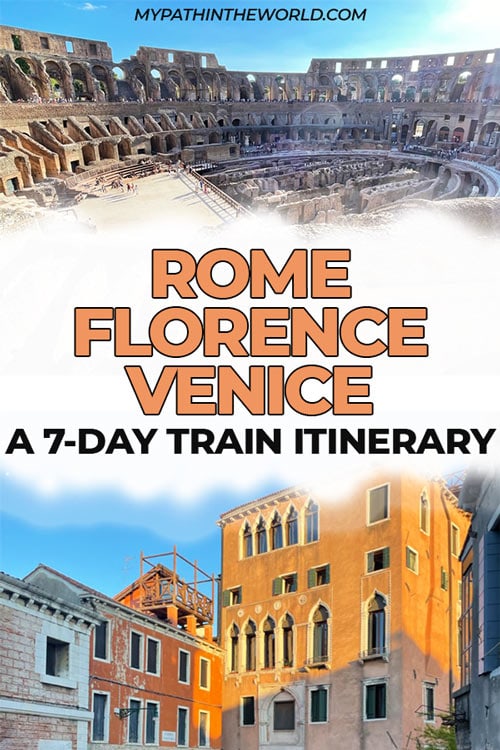
Itinerary Overview
I’m Mariana, and I’ve spent months traveling through Italy, hiking in the Dolomites, visiting the sites, and drinking Aperol on as many Italian beaches as possible.
I’ve also done this Rome to Venice trip a few times, and from my experience, here’s the best route and time in each place:
- 3 Days in Rome – Vatican, Colosseum, Trevi Fountain, Roman history
- 2 Days in Florence – Duomo (Cathedral), art museums, Michelin Experience, a day tour to Siena, San Gimignano, and Pisa or a day tour to Val d’Orcia with hidden gems
- 2 Days in Venice – Gondola ride, Basilica and Palazzo, Glass-blowing
Highly-rated accommodation in Rome: Domus Æterna – Re di Roma or The Rubens Spagna.
Highly-rated accommodation in Florence: Atelier delle Grazie or San Giuliano Inn.
Highly-rated accommodation in Venice: Ca’ Riza.
Ideal season: My favorite time to visit Italy is in the spring and autumn when the vineyards are showing off.
A 7-Day Rome-Florence-Venice Itinerary
You can actually do this route starting in Rome or Venice (Venice-Florence-Rome), as both have great airports and train stations connecting each other. I’ve always started in Rome, so this is the way I recommend it.
Day 1: Arrive in Rome
I’m pretty sure Rome is the most visited city in Europe, and so there’s a reason why I recommend at least 3 days (minimum) in the city center.
Rome is a fantastic blend of historical sites, art, beautiful people, and culinary experiences that make it a great start to the trip.
I’m going to share the top things to see today, but remember to take time to simply enjoy the “dolce vita” – the sweet life – that Rome preaches:
1. Pantheon: This ancient temple, now a church, is renowned for its perfect proportions and its oculus, an opening in the dome that shines light inside the interior beautifully. You will have to cover your shoulders for this one! You can also book a guided Pantheon tour.
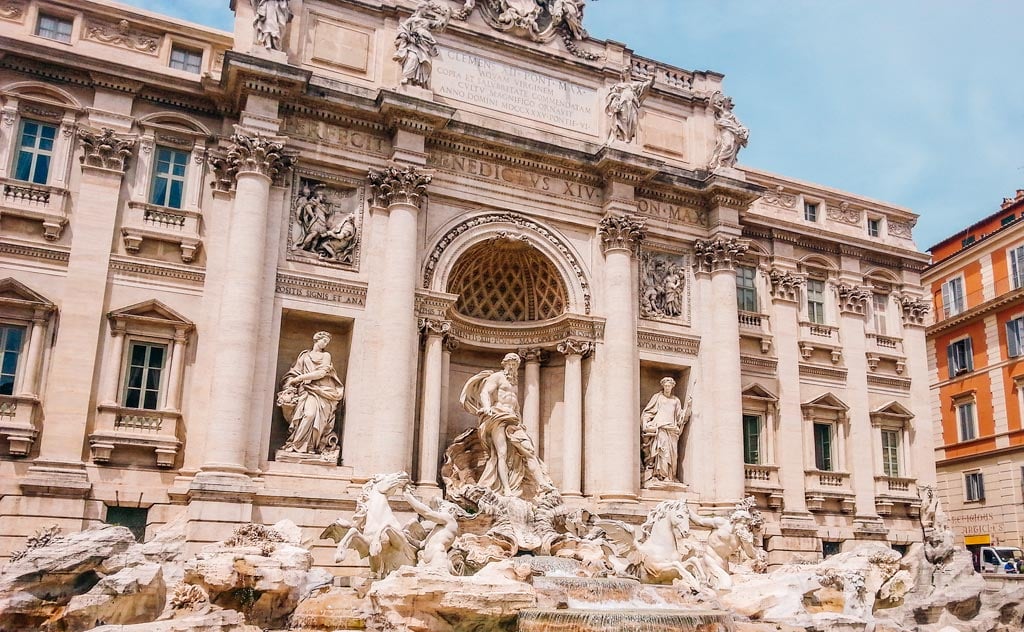
2. Trevi Fountain: One of the most famous fountains in the world, the Trevi Fountain is a baroque masterpiece. Tradition says that throwing a coin into the fountain ensures you fall in love with an Italian by the end of the trip.
3. Piazza Navona: Known for its baroque architecture, street artists, and cafes, Piazza Navona is a charming place to relax and soak in the atmosphere of Rome. This is a good spot to relish some gelato!
4. Spanish Steps: A great spot for people-watching, the Spanish Steps are a famous meeting place and lead to the Trinità dei Monti church (a must-see).
No trip to Rome is complete without stuffing your face full of Italian food. Try dishes like Carbonara, Cacio e Pepe, and Carciofi alla Giudia. Don’t worry, you can walk it off after!
Day 2: Explore the Vatican
Today is all about the Catholic Church. It will take a full day to explore the Vatican City and Trastevere neighborhood across the river, and I highly recommend booking your Vatican tours ahead of time.
Here’s what’s on the daily agenda:
1. Vatican City: Home to the Vatican Museums, Sistine Chapel, and St. Peter’s Basilica, the Vatican City is a must. Michelangelo’s frescoes in the Sistine Chapel and the stunning architecture of St. Peter’s Basilica are ‘wow’! Book your tour here or purchase a skip-the-lines ticket.
2. Explore Trastevere: This picturesque neighborhood is known for its narrow cobbled streets, vibrant nightlife, and traditional Roman trattorias. It’s a great area to have lunch and dinner.
3. Walk Along the Tiber River: Especially in the evening, a stroll along the Tiber is a peaceful break from the crazy city streets.
Day 3: Explore Rome
You’re going to enjoy your last day in Rome as much as you can, and then catch a late afternoon train (2 hrs) to Florence:
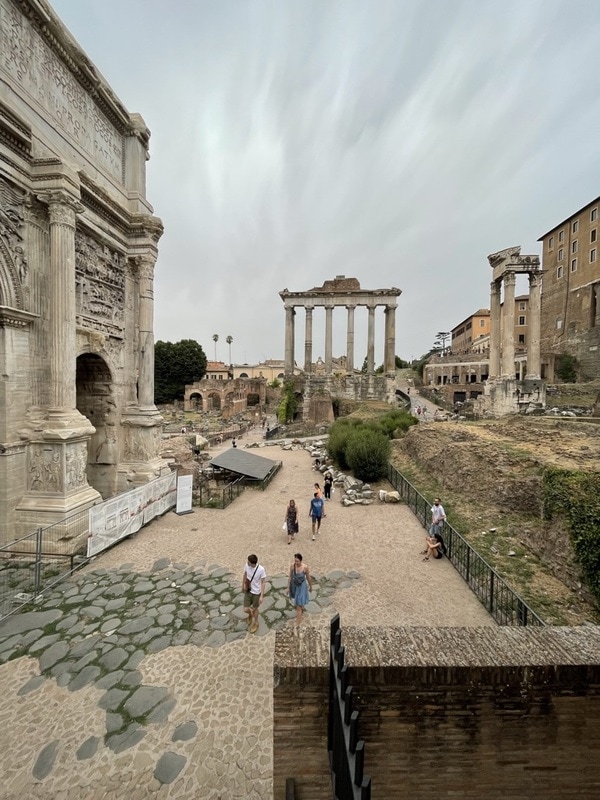
1. Visit the Colosseum and Roman Forum: Explore the iconic Colosseum, a symbol of Rome’s ancient power and engineering. Nearby, the Roman Forum and Palatine Hill ruins are also great! You can book a tour to visit both sites with a guide.
2. Galleria Borghese: Set in the beautiful Villa Borghese Park, this museum houses a substantial collection of art, including works by Caravaggio, Bernini, and Raphael. Be sure to purchase your ticket in advance.
In the afternoon, take the 2-hour train to Florence’s Santa Maria Novella station and get ready for the next leg of this Italian trip. Book your train tickets in advance on Omio (formerly GoEuro).

Day 4: Explore Florence
No rest for the wicked! I’ve done all of these things in one day, with the help of 7 espressos along the way, but feel free to prioritize (I know you’re short on time but seeing less to experience each spot more slowly is great too):
1. Uffizi Gallery Tour: Home to the world’s greatest collection of Italian Renaissance art, including masterpieces by Botticelli, Michelangelo, and Leonardo da Vinci. You MUST get a ticket with a timeslot ahead of time.
2. Duomo – Cathedral of Santa Maria del Fiore: Florence’s most iconic landmark. Just passing by it and having a coffee is fine, but you can also explore the entire complex with these skip-the-line tickets.
3. Ponte Vecchio: The oldest bridge in Florence, known for its jewelry shops and picturesque views over the Arno River.
4. Accademia Gallery: Famous for Michelangelo’s David, this gallery also houses an impressive collection of Renaissance paintings and sculptures. You can buy your ticket in advance.
5. Beautiful piazzas: Piazza della Repubblica and Piazza della Signoria. You can explore them with the free Florence walking tour.
6. Boboli Gardens: Behind the Pitti Palace, these beautifully landscaped gardens offer a peaceful escape with stunning views of the city. If you have to skip out on anything, maybe scrap these.
I was shocked by how many Michelin restaurants there are in Florence and was glad to take advantage of the foodie nature of this city. Make a reservation ahead of time – a usual nice dinner with wine goes to €100-150.

DAY 5: DAY TRIP from Florence
Not too far from Florence, you’ll find the stunning city of Siena, the cutest little Tuscan town of San Gimignano, and the city of Pisa further west.
The best way to visit these when you’re short on time is by booking a tour – this way, you get the history buff tour guide and the transportation. I know it doesn’t seem like a lot, but it’s a full day.
Book your day tour to Siena, San Gimignano, and Pisa!
Alternatively, you can also book a day tour to Val d’Orcia and its medieval villages.

Day 6: Explore Venice
I left Florence on the early morning train and headed to Venice. It took about 2 hours – make sure you grab a coffee and breakfast before you go. Book your train tickets in advance on Omio (formerly GoEuro).
Venice blew my mind! I don’t know what I was expecting, but it was much more romantic and charming than I realized. Here are the top things to do in Venice, which you can split over the two days:
1. St. Mark’s Square (Piazza San Marco): The heart of Venice, home to the stunning St. Mark’s Basilica, the Campanile bell tower, and the Doge’s Palace. The square is a hub of activity and a perfect starting point for your visit.
2. Doge’s Palace (Palazzo Ducale): Explore this symbol of Venice’s wealth and power, with its magnificent rooms, artwork, and the famous Bridge of Sighs. You can also book a tour of the Doge’s Palace & St. Mark’s Basilica.
3. Rialto Bridge and Market: Visit the oldest bridge across the Grand Canal, a lively area filled with shops, and the nearby Rialto Market, known for its fresh produce and seafood.
4. Grand Canal Tour: Take a gondola or Vaporetto (water bus) ride along the Grand Canal to witness the magic of Venetian architecture and life along the waterways. A gondola ride is about an hour and should cost about €80.
If possible, attend a performance or take a tour of the famous and beautifully restored opera house, and wander the less-traveled paths and canals to discover hidden squares and charming cafés away from the crowds.

Day 7: Explore Venice
In the morning, keep exploring the places you didn’t get to the day before.
For lunch, make sure you sample local goodies like Cicchetti (Venetian tapas), any of the fresh seafood on the menu, and traditional dishes like risotto nero (squid ink risotto) and sarde in saor (sweet and sour sardines).
In the afternoon, take a boat trip to Murano and Burano Islands nearby. Murano is famous for its glass-making, while Burano is known for its lace-making and brightly colored houses. Vaporettos (water taxis) are your friend for these trips. You can also book an excursion.
From here, you can either take the train back to Rome the next morning or fly on to your next destination – or home!

Getting From Rome to Venice
Traveling from Rome to Venice can be done in several ways, each with its own pros and cons. I recommend doing this Italy itinerary by train, but I wanted to show you what’s possible.
✅The best way to do this trip is by train. Italy’s high-speed trains, like Frecciarossa, connect Rome to Venice in about 3.5 to 4 hours, with so many stops along the way to break up the trip – like Florence and Bologna.
Trains are punctual, fast, and allow you to enjoy the scenery without the stress of driving. The downside is the lack of flexibility; you’re limited to the train schedule and routes, and there’s less opportunity for spontaneous exploration.
✅Driving is the most flexible way to get from Rome to Venice. You have the freedom to stop in cute little towns and scenic spots along the way – and there are plenty.
However, driving in Italy can be challenging due to traffic, especially in cities, and parking can be expensive and tough to find.
What’s more, navigating the ZTL (Limited Traffic Zones) in places like Rome, Florence, and Venice requires planning to avoid fines.
✅Flying is the quickest way to travel between Rome and Venice, with the flight time being just over an hour. However, when you factor in the time for airport transfers, security checks, and waiting at the airport, it may not save much time compared to the train.
Also, you miss out on the scenic journey and the chance to visit places between the two cities.
Each mode of transportation gives you a unique experience, so your choice depends on your priorities, whether it’s flexibility, speed, comfort, or the opportunity to explore.
More Travel Tips for This Trip
✔️Pack Right: Bring a little backpack with you at all times, and fill it with your charger (don’t forget the European adapter), a water bottle (especially in the summer), and snacks (which you can buy along the way).
Comfortable walking shoes are a must. So is one cute night outfit, because you’re going to some of the most romantic places in Italy.
✔️Be Flexible: While it’s good to have a plan, be open to spontaneous detours or stops. Some of the best experiences come from unplanned adventures. Like why not skip the Vatican and take a day trip from Rome to Pompei?
✔️Learn Basic Italian: Phrases for greetings, directions, the bathroom, and ordering food will be particularly helpful. And maybe a few curse words, just for fun.
✔️Show some Respect: Dress appropriately when visiting religious sites, cover your shoulders and head in all churches, and be nice when chatting it up with locals. And tip your waiter!
✔️Don’t Be A Tourist: Don’t put your wallet in the back pocket of your jeans, and don’t leave your phone on the table as you eat (like I do in the States), because that makes you an easy target for petty thieves.
That said, Italy is pretty safe, so just apply the same watchful eye as you might in New York City.

FAQ: Rome-Florence-Venice by Train
Is It Worth Taking a Day Trip From Rome to Venice?
Not really. The fastest train from Rome to Venice is just under 4 hours. Driving will take almost 6 hours. And while a flight takes 1 hour, getting to and from the airport, will add a few more hours.
What Are the Best Places to Stop Between Rome and Venice?
If you want to extend this tip, I think the top 5 best places to stop on this route are:
1. Florence: Known as the cradle of the Renaissance, Florence is the epicenter of art, architecture, and history in Italy. Visit the Uffizi Gallery to see works by Michelangelo and Botticelli, and don’t miss the iconic Duomo.
2. Siena: This medieval town in Tuscany is famous for its historic center, a UNESCO World Heritage Site. Highlights include the Piazza del Campo and the Siena Cathedral. The Tuscan countryside around Siena, known for its vineyards, is the backdrop to my phone.
3. Bologna: Often overlooked, Bologna is a hidden gem. I love it for its rich food culture (think authentic Bolognese sauce).
4. Verona: Famous as the setting for Shakespeare’s Romeo and Juliet, Verona is a city for lovers. Visit Juliet’s House and explore the ancient Roman arena here.
5. Padua: Before reaching Venice, stop in Padua, known for its historic architecture and art. The Scrovegni Chapel, with frescoes by Giotto, is a highlight. Padua also has a lively market and beautiful botanical gardens, the oldest in the world.
PRO TIP: Remember to check the opening times of everything and book tickets in advance (trust me!) to make the most of your stops.

Is a Road Trip Through Italy a Good Idea?
Although this itinerary is better done by train, a road trip through Italy is a fantastic idea, especially if you love Italian food and art history, and value the old-school charm of “dolce vita” life. More specifically, here’s a few reasons to hit up Italy for a road trip:
Pretty Landscapes: From the rolling hills of Tuscany to the rugged coastlines of Amalfi, a road trip through any part of Italy will showcase some pretty epic scenery.
Rich Culture: Every region has its unique heritage, from ancient Roman ruins in Rome to Renaissance art in Florence. Road-tripping lets you explore cultural gems like the Tower of Pisa, a Tuscan winery, the Vatican, and the canals of Venice at your own pace.
Yummy Food: Italy is a paradise for foodies, from the ragú in Naples to seafood in Sicily. You’ll be shocked to know that Italy is more than just pizza and pasta.
Charming Villages: Beyond the major cities, Italy is dotted with cute little towns and villages, often less visited by tourists. Road tripping (even by train) gives you the freedom to discover these hidden gems and experience the authentic Italian way of life.
Final Thoughts
I’ve spent months traveling through Italy – I’ve tried this Rome to Venice itinerary a few times, and I think the best way to get from one spot to another is by train.
I recommend visiting Italy in the spring or fall months when the tourist crowds are more manageable and it’s not so blistering hot in Italy.
Bio: Mariana Barbuceanu is the owner and author of the Road Trip EuroGuide, a blog that inspires fellow wanderers to explore Europe more authentically through slower travel and digging deeper into the culture of a place. When she isn’t writing about her adventures, she is planning trips for her community and coaching people on how to take that next step toward a much-needed sabbatical.
Related Posts
More on Italy:
- Places to see in Central Italy
- Italian piazzas
- Best Italian road trips
- Italy in winter
- Gifts for Italy lovers
- Italy travel quotes
- Romance novels set in Italy
- Books set in Tuscany
- Places to visit in Lombardy
- Places to visit in Piedmont
- Hidden gems in northern Italy
- Best road trips from Milan
More European city breaks:

Do you know if the hotels will let you leave your luggage before check in time?
thank you for all the helpful info.
Hey!
That would vary from hotel to hotel and depend on its reception opening hours (some don’t actually have reception services at all), so if it’s not clear when you’re reading the booking page, it’s best to contact the hotel. In any case, there are also services of luggage storage lockers, which I find very convenient.