
Choosing to spend one week in Krakow is the way to go. Not that a weekend wouldn’t be fun, but if you like traveling more slowly and exploring a destination more thoroughly, 7 days are definitely more suitable for this kind of vibrant city.
Here’s how I made the most of my time in one of the best places to visit in Poland.
*I try to keep the information on this blog as updated as possible, but I still recommend consulting the latest prices, opening hours, and other details on the official website of each site, hotel, and tour, as well as checking the updated public transport routes and timetables. I share my personal experience and cannot guarantee yours.
*This post may contain affiliate links from which I earn a commission. As an Amazon Associate, I earn from qualifying purchases. For more info, read my disclosure and disclaimer. This post may show pop-ups.
*As a Get Your Guide affiliate program member, I got a 15% discount when I booked my Krakow activities. That said, I always share my honest opinions.

1-Week Krakow Itinerary Summary
Day 1: Krakow’s Old Town.
Day 2: Jewish Quarter (Kazimierz).
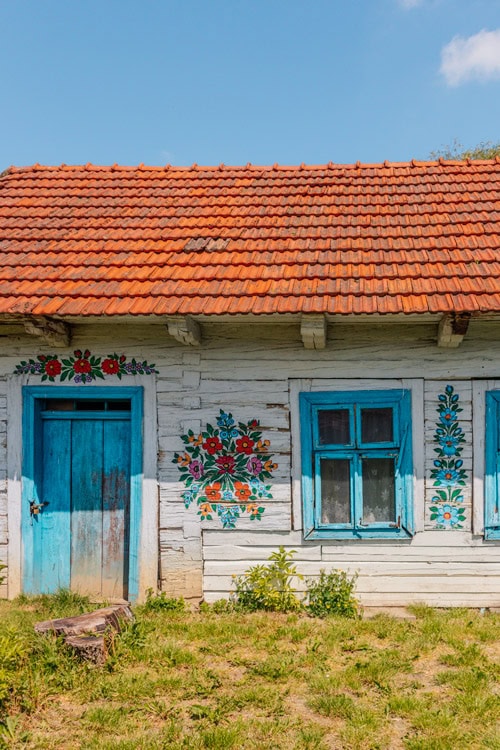
Day 3: Half-day tour to the painted village of Zalipie (one of the highlights of my trip, perfect for hidden gem lovers) + botanical garden.
Day 4: Wieliczka Salt Mine + Wawel Hill.
If you don’t want to book tickets and get there independently, you can also book a Wieliczka Salt Mine tour with pickup from Krakow.
Day 5: Day trip to the town of Zakopane (at the foot of the Tatra Mountains).
If you don’t want to visit on your own, you can book a full-day tour to Zakopane (most also include some time in the nearby Chocholow Thermal Baths and a cable car ride).
Day 6: Podgórze district + Vistula river banks.
Day 7: Day trip to Auschwitz-Birkenau.
Still on my bucket but I do want you to know your options – you can also book a day trip to the Ojców National Park and Ogrodzieniec Castle (the castle was a filming location of The Witcher).
You should also check out these themed free walking tours of Krakow.

Where to Stay for One Week in Krakow
I’m not the only one that’ll tell you the two best areas to stay in Krakow are the Old Town and the Jewish Quarter.
The Old Town is beautiful and colorful with lots of charming streets and historical landmarks. It’s the heart of the action – touristy but very lively and offers plenty of cafes and restaurants to choose from.
Highly rated accommodations in the Old Town include Main Square Apartments and Old Town Luxury Apartment.
The Jewish Quarter has a completely different vibe – it feels historical but also quirky and hipster. You’ll find streets packed with seemingly neglected old buildings and Jewish heritage sites alongside cool concept shops, cafes, restaurants, and bars.
I stayed in the Jewish Quarter at this apartment (the Superior Studio). The building may be old, like many others in the area, but this studio has been modernly refurbished. There is also some tram noise and light in the morning, but the location is still perfect on a pleasant main street near dozens of amazing places to eat.
Its rating has decreased, so higher-rated accommodations in the Jewish Quarter include MameHome Apartments and Warszauer Hotel.

Day 1
Old Town
The medieval Old Town (Stare Miasto) is the first area to take center stage when planning a trip to Krakow. Abundant in colorful streets and historical landmarks, this UNESCO World Heritage Site is the city’s main touristic hub.
You can see that many buildings here were remodeled and repainted, so it doesn’t always feel authentically old, but that doesn’t take away from its charm. The crowds might do that instead, though, to me, it didn’t feel unbearably crowded – it just felt lively.

Things to do: Apart from roaming this maze of streets and squares, there are definitely some points of interest you cannot miss.
The Main Market Square (Rynek Główny) is where you’ll find the majestic St. Mary’s Basilica (see opening hours for tourists), the Town Hall Tower, the unique Rynek Underground Museum, and the Cloth Hall (Sukiennice), a significant trade center that now houses souvenir stalls and a museum of 19th-century Polish art.
The bustling Florianska Street will lead you to some remains of the medieval city walls and gates including St. Florian’s Gate and the Barbican.
Other noteworthy spots include the surrounding Planty Park, Saints Peter and Paul Church, St. Andrew’s Church, and the Czartoryski Museum, especially known for housing paintings like Landscape with the Good Samaritan by Rembrandt and The Lady with an Ermine by da Vinci.
Feel free to check out my full Krakow Old town bucket list.

Places to eat: I’m happy with the cafes and restaurants I tried in this area, including Tradycyjne Polskie Smaki, a cozy self-service spot with hearty traditional Polish food (also beloved by locals, which is a good sign), and Żarówka Cafe, hidden in a quiet courtyard.
A stone’s throw away from the old town, I also highly recommend checking out the cozy Szalej Cafe that celebrates one of my favorite carbs, challah bread.


Day 2
Jewish Quarter (Kazimierz)
At first sight, you might not be impressed by this district, but it is truly fascinating and fun to explore.
Technically, you can see it in a couple of hours, but if you take the time to experience everything it has to offer or just roam it more slowly, you’ll need at least a whole day.
Let’s begin with a few historical facts –
- It dates back to the 14th century when King Casimir III established it as an independent city.
- A century later, the Jewish community of Krakow was forced to move here and helped it flourish economically and culturally.
- Kazimierz became a neighborhood of Krakow in the 18th century.
- In WWII, the Jews were forcibly relocated to the ghetto in the Podgorze district.
- The district has been neglected in the communist era and revived, and today, it’s a total hotspot full of contrasts with historic sites alongside cool food spots and bars.

Things to do: You have to start by visiting the quarter’s synagogues, my favorite being the stunning 19th-century Tempel Synagogue (if you’re Jewish like me, there’s a good chance its beauty will make you tear up).
The 15th-century Old Synagogue and the 16th-century Remuh Synagogue are also incredibly significant. Next, visit a few museums, like the Galicia Jewish Museum, the unique Wheels & Heels, or the Banksy Museum.
Then, take your time to wander the streets freely (the best activity in any destination), but don’t miss Jozefa Street with its concept shops and famous mural, and Szeroka Street with its Jewish restaurants and charming old shop signs.

Places to eat: From Krakow’s coziest cafes and bakeries to Polish and international cuisine restaurants to street food spots and the coolest bars, I promise Kazimierz will not disappoint.
There are still so many places I need to try, but my favorites on this trip were:
- Breakfast at Urban Coffee (don’t miss their Krakow bagel!)
- Zapiekanka (a warm open sandwich, which is a famous local street food) at Plac Nowy
- Pierogi (Polish dumplings) at Mr Vincent
- Ramen at Akita Ramen
- Vietnamese food at Hugo Asia
- Homemade traditional cakes at Vanilla
- Drinks at Singer with its sewing machine tables
- Food truck areas like Judah Food Market
All in all, it’s worth exploring this district more slowly to discover all of its treasures, so check out my full guide on the best things to do in Krakow’s Jewish Quarter to make the most of your time.


Day 3
Painted Village of Zalipie
Whether visiting an undiscovered destination or finding hidden gems in a popular one, I LOVE traveling off the beaten path, and that’s exactly why I decided to take a half-day tour to Zalipie.
This underrated village is situated amidst the tranquil countryside of Lesser Poland and is known for colorful floral art adorning its houses, a 100-year-old tradition that aimed at reviving the soot-covered homes due to the lack of use of chimneys.
It really is a unique place to visit, especially when you’re spending 1 week in Krakow with enough time to add some offbeat sites. The car ride here is so scenic, and the painted houses are just beautiful, so the experience is both photogenic and culturally fascinating.
I highly recommend you book a private guided Zalipie tour (as I did) because it’s not easy to get there by public transport. Plus, a guide will take you to the best locations in the village while sharing interesting information about the local history and culture.
If you’re still unsure about this day trip, read my full Zalipie guide.



Botanical Garden
The Botanical Garden of the Jagiellonian University is located about 1 km from the Old Town and not near other attractions, so it’s convenient to visit it after the half-day trip.
Spanning 9.6 hectares, it’s a picturesque place where you can easily spend a few slow-paced hours taking in the green scenery.
Established in the 18th century, it now boasts thousands of plant species from around the world, including flowers, trees, and even tropical plants housed in a few greenhouses.
Beyond the garden itself, I wouldn’t miss a coffee & cake break at the on-site cafe, Milin Cafe. Options are limited, but everything is high quality.
Note that opening hours change throughout the year, so consult them here before visiting.


Day 4
You can switch between the two, visiting Wawel in the morning and the salt mines later that day.
Wieliczka Salt Mine
Situated roughly 30 minutes by bus from the city center, the infamous Wieliczka Salt Mine is an unmissable attraction and a UNESCO World Heritage Site.
These unbelievably vast and intricate salt mines (with roughly 2,500 chambers) have been operating since the 13th century, and it feels like a total privilege to be able to explore them.
The 2-3 hour-long guided tour allows you to learn about the site’s history and mining process while taking you through a handful of chambers at different levels underground. Not to give any spoilers, I’ll just say this place is very impressive and well-maintained.
It’s important to consider that you need to walk down A LOT of stairs at the beginning and some throughout the tour (there’s a tiny elevator that takes you back up at the end) and that being underground for that much time can feel claustrophobic and overwhelming. I definitely got to the point of needing the sunlight and fresh air.
You can get there independently by bus (number 304) and book your tour in advance on the official website (opt for the Tourist Route) or book a half-day tour that also includes transportation.


Wawel Hill
Every self-respecting Krakow itinerary mentions Wawel Hill, famous for its striking medieval fortified complex which served as the residence of Poland’s kings, consisting of the Wawel Royal Castle, Wawel Cathedral, and several other buildings.
You can wander for free around the lovely courtyards, where I could have taken a thousand photos because each angle revealed more beauty, or visit parts of the castle, including some of its rooms, royal gardens, the armory, and more.
There’s a combined guided tour (called The Most Precious) and a combined ticket (called Wawel for Enthusiasts), but if you only want to see specific parts of the complex, you need to purchase an individual ticket with a timeslot for each area, which I found a bit inconvenient.
See all your options here (choose a date and then “museum visit” under the Wawel Royal Castle), and be sure to book your tickets in advance as this is a highly popular landmark.
Afterward, walk down to see the fire-spitting statue of Wawel’s Dragon, a homage to the local legend of the hill’s ferocious dragon defeated by a peasant.


Day 5
Zakopane Day Trip
Ideally, you’ll want to visit the resort town of Zakopane on a trip dedicated to the Tatra Mountains, so you don’t just see the town itself but also the entire surrounding area with its captivating natural landscapes.
Zakopane is popular for skiing in winter and hiking in summer, but if you only have one day, it makes for a lovely day trip from Krakow to get a glimpse of that area’s culture and views.
Touristy as it is, which you can like or dislike, it’s nice to stroll through its main street, Krupówki, amongst the shops, restaurants, and cafes housed in cute wooden cabins.
While you’re at it, admire the Holy Family Church, visit the Tatra Museum, stop for lunch at Karczma Zapiecek (I loved the pierogi filled with their typical local Oscypek cheese), and indulge in hot chocolate at E.Wedel.
I didn’t have enough time, but I would have also loved to take a ride on the Kasprowy Wierch Cable Car or the Gubałówka Funicular.
It’s incredibly easy to get to Zakopane from the Krakow Central Bus Station (which is quite small and easy to navigate), with buses leaving every 10-30 minutes.
You can buy tickets in advance on Omio, at the ticket office (as I did), or directly from the driver. Prices are around 32 PLN for one way, and the scenic ride takes about 2 hours and 15 minutes.
Alternatively, book a full-day Zakopane tour (that also includes some time in the nearby Chocholow Thermal Baths and a cable car ride).

Day 6
Podgórze District
Once a flourishing, commercially important independent city, the Podgórze district is mostly known as the location of Oskar Schindler’s Factory and the Krakow Ghetto during World War II.
Things to do: Start by visiting Oskar Schindler’s Factory, where the German industrialist employed and saved more than 1000 Jews.
It functions as a museum dedicated to the history of the German occupation and the ghetto in Krakow, so it was a heavy experience for me, but it’s so important to learn about it.
Make sure to buy your ticket in advance (as I did) or book a guided tour to skip the extremely long lines!
Continue to the Jewish Ghetto Memorial and the Eagle Pharmacy (or Pharmacy Under the Eagle), operated by the Polish pharmacist Tadeusz Pankiewicz during WWI, which served the Jews as a refuge and a place to get free medications, smuggle food, and more.
Head to Podgórze Market Square to see the imposing St. Joseph’s Church, and if you’re looking for hidden gems in Krakow, walk up the streets of Parkowa and Plac Lasoty to glimpse at the mysterious Villa Matula and other glamorous houses, testimony to the exclusive status this district once had.
Places to eat: In the streets right near Father Bernatek’s Bridge, you’ll find plenty of cool cafes and restaurants. Not too far from there, I chose to have lunch at Gąska, which served Polish cuisine in a stylish but homely ambiance.


Vistula River Banks
Spending a week in Krakow can sometimes feel overwhelming with all the historic sites you’re visiting, some beautiful with royal past and others reminding a dark era, so one of my favorite ways to unwind and take a step back was strolling along the Vistula River.
Stretching from the Grunwald Bridge to Powstańców Śląskich Bridge, the lovely boulevard offers walking and cycling trails, plenty of grass and benches, and pretty views.
I found the northern side near the Jewish Quarter more pleasant to stroll, with some big boats along the way housing restaurants and bars, but from Podgórze, you can walk to the indoor food market Hala Forum and the Ferris wheel Kraków Eye.


Day 7
Auschwitz-Birkenau Day Trip
Full disclosure: I’ve been to Auschwitz in the past and did not want to visit again on this trip because it’s overwhelming, especially as a Jewish person. But if you’re a first-timer in Krakow, you must add it to your itinerary, even if it’s a heavy experience that takes time to process.
This complex of Nazi concentration and extermination camps is where 1.1 people were murdered, most of which were Jews.
It’s a place to visit to see exactly where those atrocities happened, learn about them, and remember them to ensure history won’t repeat itself.
As for getting there, I’ve read about a lot of last-minute tour cancellations, so I suggest reserving your spot directly on the official website anf getting there on your own. Some hours allow an independent visit, which is free of charge, and others offer a paid guided tour, the recommended option.
From Krakow’s Main Station, you can get to Auschwitz in less than an hour by train.
Other Tips and Notes for Having the Best 7 days in Krakow
Money: The local currency is Zloty (or PLN). You should bring some cash with you, though you can pay with a credit card in most places, including public transport, restaurants, and attractions.
Free museum days: Like in other cities in Poland, many of Krakow’s museums offer free admission on a certain day. It can make your itinerary planning feel a bit more like a puzzle, but it’s good to know your options. Here’s the full list.
Getting around: You can wander the city center on foot (much of the Old Town is pedestrianized), but sometimes, the distance between two spots can feel a bit too much, so buses and trams are available. Ticket machines are found near many stations with a single journey and multi-day options, and then you just need to validate your ticket on board.
Getting from the airport to the city center: I’ll be honest – in most cases, I take a taxi because I don’t mind paying more for the convenience, but if you prefer using a bus or train, here’s all the info you need.
Is there anything else you’d like to know? Let me know in the comments!
Other Poland Travel Guides
- Landmarks in Poland
- Things to do in Warsaw
- Free things to do in Warsaw
- Reasons to visit Warsaw
- Things to do in Poznan
- Reasons to visit Poznan
Other European city break itineraries:

*Your emil address will not be published. By using this form you agree with the storage and handling of your data by this website