
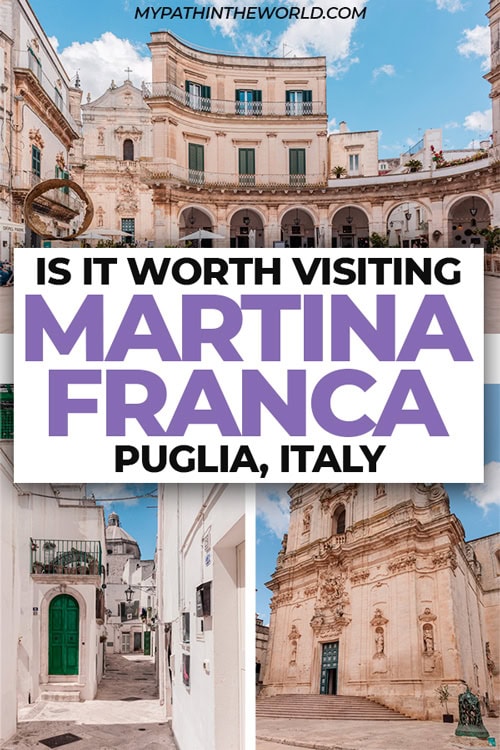
If you’re wondering which towns to include on your Puglia itinerary and thinking, “Is Martina Franca worth visiting?”, I hope this post helps you decide exactly that.
I know how impossible it feels to prioritize when planning a trip to this region, and it’s okay to not tick everything off the Puglia bucket list, because it’s never-ending. So let’s see if Martina Franca is for you.
*I try to keep the information on this blog as updated as possible, but I still recommend consulting the latest prices, opening hours, and other details on the official website of each site, hotel, and tour, as well as checking the updated public transport routes and timetables. I share my personal experience and cannot guarantee yours.
*This post may contain affiliate links from which I earn a commission. As an Amazon Associate, I earn from qualifying purchases. For more info, read my disclosure and disclaimer. This post may show pop-ups.
Where is Martina Franca?
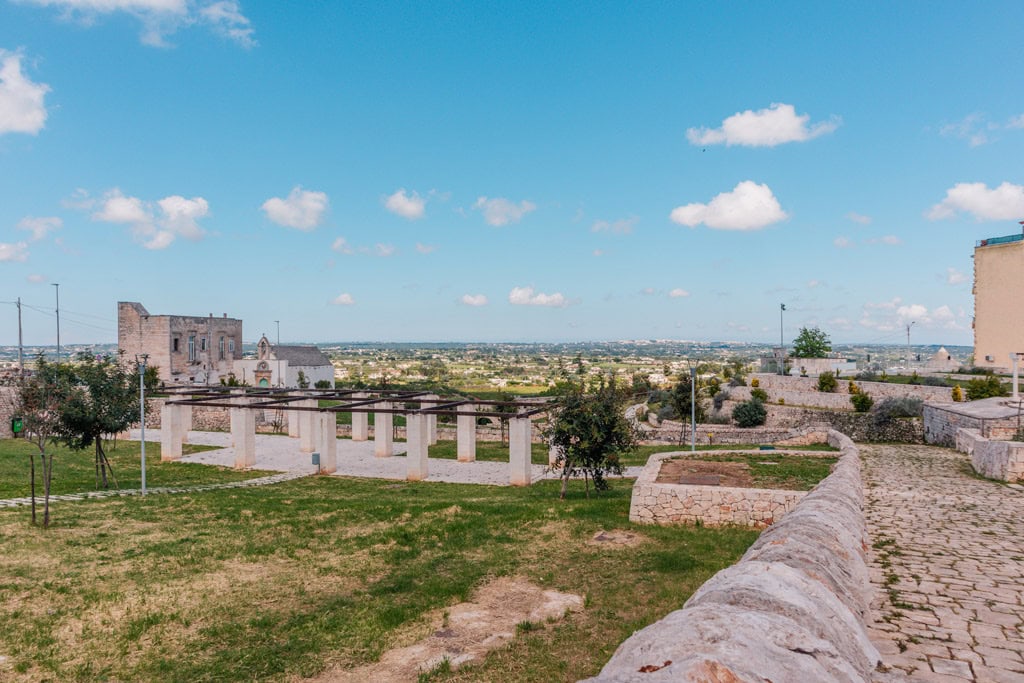
Right between Puglia’s Ionian and Adriatic coast, the town is located in the heart of the Itria Valley, famous for its countryside views dotted with the unique Trulli houses.
It’s only a few km away from Alberobello, Locorotondo, and Cisternino.
Is Martina Franca Worth Visiting? Why I Say YES
It Has an Interesting History (and Landmarks)
Founded officially in the early 14th century by Philip I of Anjou, Prince of Taranto, Martina Franca grew quite rapidly after he granted the settlement tax exemptions to attract inhabitants, and so he did, especially farmers.
Fun fact: One of the translations of ‘Franca’ in Italian is free or exempt, while the Martina part comes from San Martino, the patron saint and the name of a former settlement in the area.
In the early 16th century, the town came under the control of the noble Caracciolo family (a part of the Kingdom of Naples) as the Dukes of Martina, who cancelled the tax privileges.
They ruled the town for around 300 years, almost until the unification of Italy, while it flourished agriculturally (and economically), architecturally (Baroque being the prominent style), and culturally.
Martina Franca doesn’t boast too many landmarks, so it’s not a place for a sightseeing spree. Exploring its historic center freely is the best way to enjoy it.
However, I still wouldn’t miss these spots:
- Porta Santo Stefano: A 14th-century Baroque-style archway leading to the old town
- Palazzo Ducale: Now the town hall, it is a 17th-century Baroque palace, commissioned by the Duke of Martina, Petracone V Caracciolo
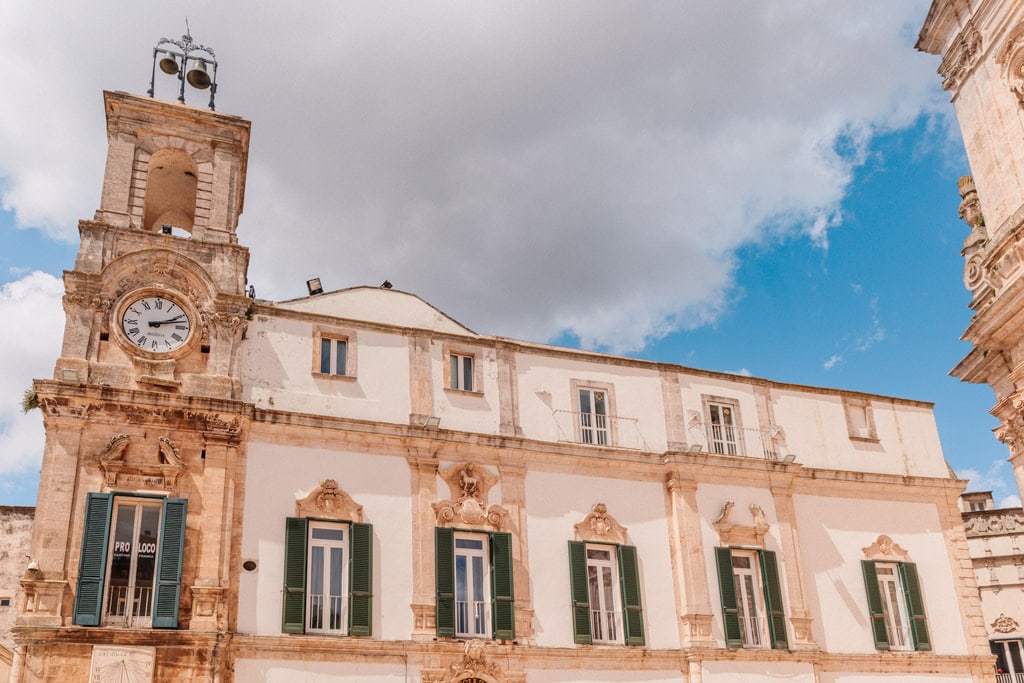
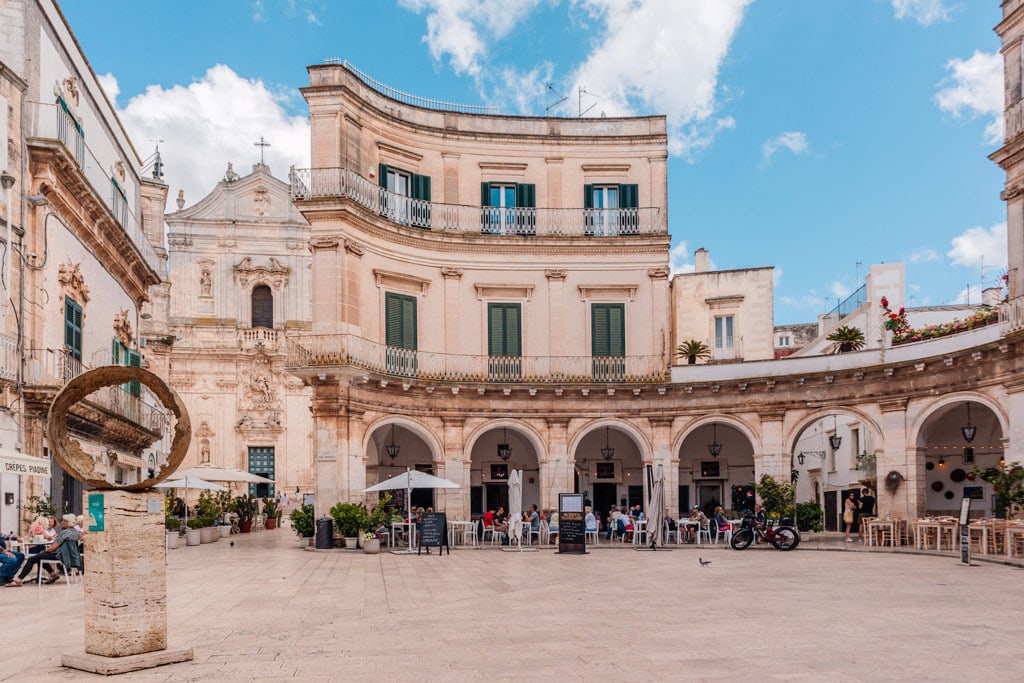
- Piazza Plebiscito: Home to the Torre dell’Orologio and the Baroque-style Basilica di San Martino, both dating to the 18th century
- Piazza Maria Immacolata
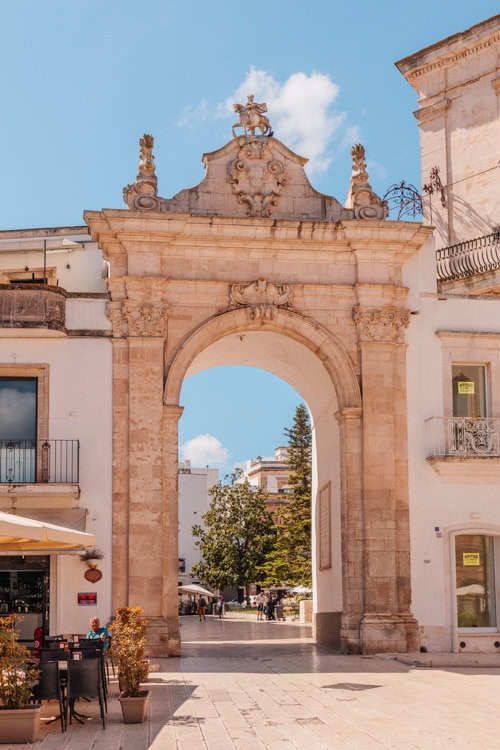
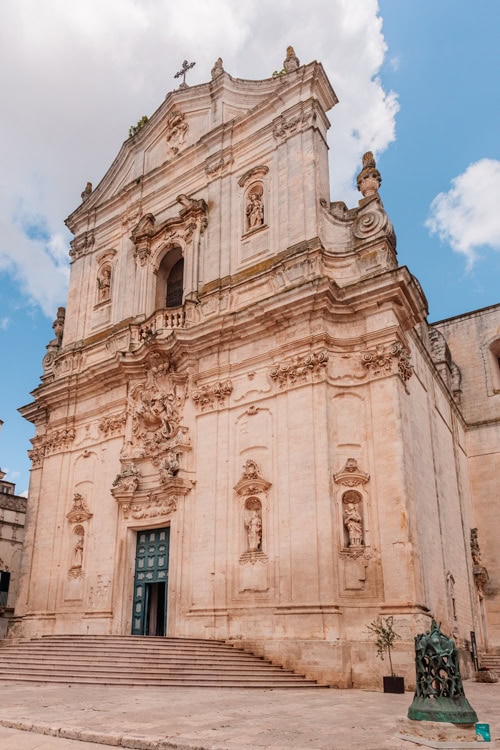
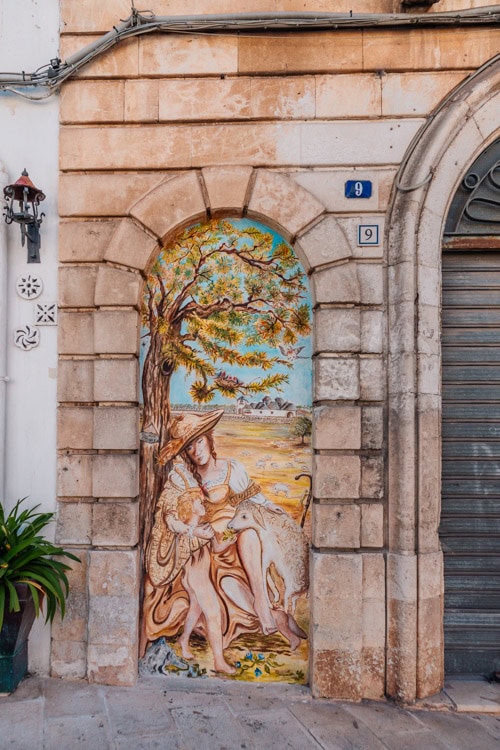
I Think Its Whitewashed Historic Center is One of the Prettiest in Puglia
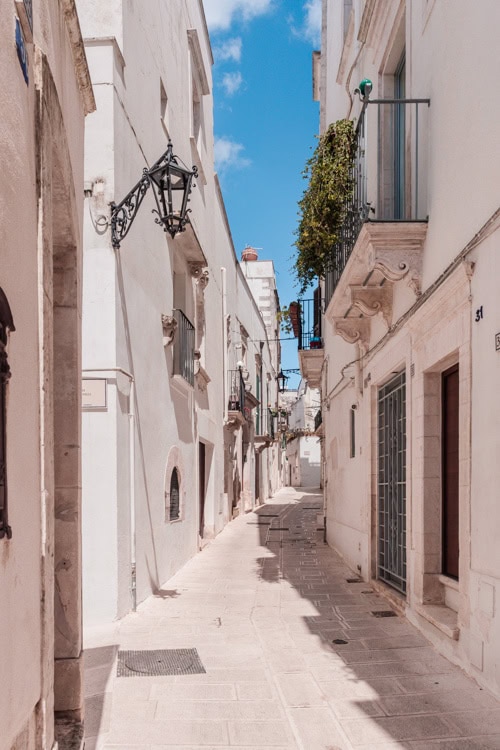
I know I’m not the only one who loves getting lost in a maze of historic alleys and piazzas, and I’ve yet to find an old town in Puglia I didn’t like exploring, but Martina Franca’s is still one of my favorites.
I can’t quite put my finger on why it felt extra enchanting to me, but it did. Maybe it was the quieter, less touristy vibe, or maybe it was the sheer beauty of its whitewashed alleys – all I know is that it feels special and worth your time.



Local Wines (and Food) Are Worth Trying
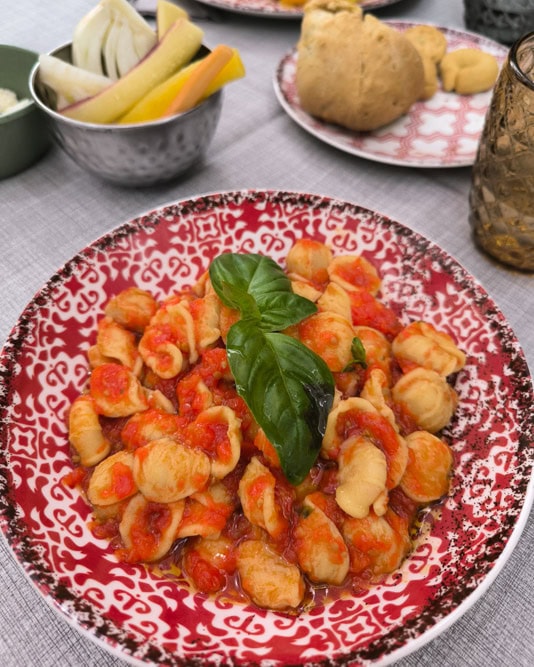
Apulian foods and wines are a force to be reckoned with, truly some of my favorites in all of Italy, and beyond the ones famous throughout the region, it’s worth paying attention to those typical to a certain sub-area.
From white and sparkling Martina Franca DOC wines to dishes made with locally-sourced vegetables, you can have one of the best Apulian culinary experiences in this town. My own restaurant recommendation – Origini.
*I don’t personally consume pork, but know that famous foods here also include Capocollo di Martina Franca (a type of local charcuterie) and Bombette (pork meat rolls stuffed with caciocavallo cheese).
The Authentic Atmosphere
I can’t say that Martina Franca is a hidden gem in Puglia, because it is quite a well-known place, but it does seem like it’s not as visited as other towns in the region, at least not until the peak season.
To me, it felt authentic & non touristy, some areas of it being completely serene (and I had them all to myself) while others showed a perfect ratio of locals going about their day and travelers taking it all in.

You Don’t Need to Rent a Car to Visit
If by any chance, you’re planning on visiting Puglia without a car, as I did, you can easily reach Martina Franca by bus as a day trip from Bari.
It is the same bus that goes to Alberobello, the famous Trulli town, so it is very busy during the tourist season, but it’s still a good option for getting here. You can easily book your bus ticket on Omio.
Alternatively, you can book a day tour from Bari to Alberobello, Martina Franca, and Locorotondo!
“Puglia Without a Car” Digital Guide
Shop My Full “Puglia Without a Car” Digital Guide
- Save time on creating your trip map from scratch and figuring out the logistics
- Plan your trip more easily without getting overwhelmed and have all the info in one place
- Make the most of your time in Puglia according to your travel pace and preferences
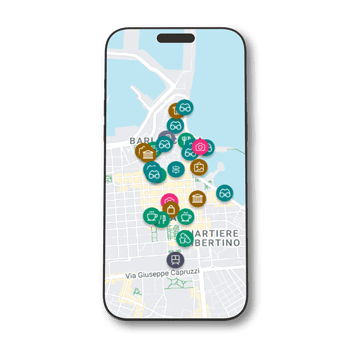
You’ll get:
- A map with 150+ spots (with info and my personal notes for each place)
- Super detailed practical guides for planning a car-free trip more easily (where to stay, getting around, optional itineraries, and so much more)
- A useful itinerary builder
- Lifetime access including updates
Martina Franca VS Lecce
I’m adding this part just because I saw the question of “should I visit Martina Franca or Lecce” a few times due to both of them being known as Baroque towns.
If you have the time, it’s an easy answer – visit both. If anything, I’d visit Martina for its historic center’s alleys rather than for its Baroque landmarks.
If you can only visit one, I’d choose Lecce because it really is a Baroque powerhouse that feels like an open-air museum.
Lecce’s old town is majestic and elegant, but also welcoming and friendly, and overall, there’s more to do and see there. Definitely one of Puglia’s highlights for me.
In terms of time on your itinerary, you’ll probably spend only a few hours or half a day in Martina Franca, while the gorgeous Lecce is bigger and deserves at least a full day.

Related Posts
More on Puglia:
- Where to stay in Lecce
- Salento Peninsula guide
- Is Bari worth visiting?
- 2 days in Bari
- Things to do in Bari
- Where to stay in Bari
- Puglia in March
- Puglia in May
- Hidden gems in southern Italy
More on Italy:
- Best Italian road trips
- Prettiest Italian piazzas
- Italy travel quotes
- Gifts for Italy lovers
- Romantic novels set in Italy
- Things to do in Italy in winter
Other related posts:

*Your emil address will not be published. By using this form you agree with the storage and handling of your data by this website